CANADIAN SCOTTISH TERRIER CLUB


Did you know ?
Reprinted from The Wonderful World of Bouviers,4th Edition, The Alberta Bouvier des Flandres Club
-
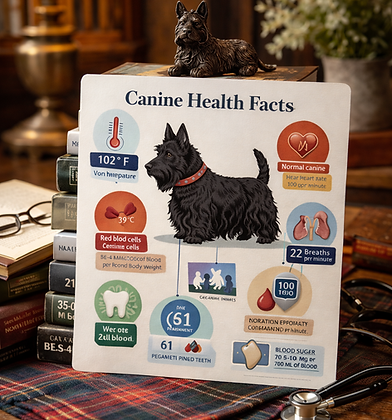
That the normal canine temperature is 102 degrees F or 39 degrees C
-
That the normal canine respiratory rate is 22 breaths per minute.
-
That the normal canine heart rate is between 100 – 130 beats per minute.
-
That the normal canine gestation period is 61 days.
-
That canines have 7 blood group systems.
-
That canines have 35 – 40 ml of blood per pound of body weight.
-
That if a canine heart beat (pulse) rises 30%, they can lose 20 – 25% blood (equal to 8 – 10 ml loss of blood per pound of body weight).
-
Acute blood loss of 1/3 blood volume can cause shock, but 1/3 to 2/3 of blood volume can be lost over a 24 hour period and still be tolerated.
-
That canines have 28 deciduous teeth (Baby teeth) and 42 permanent teeth.
-
That the normal value of blood sugar in dogs is from 75 to 100 mg per 100ml of blood.
-
That a dog’s normal urine volume is 20 – 100 ml per kg of body weight.
-
With canine distemper the incubation period is 6 to 9 days but sickness may not be observed until 2 to 3 weeks after exposure.
-
With canine hepatitis (infectious) all ages of dogs are susceptible, and exposure usually occurs by ingestion of the virus.
-
Leptospirosis in dogs (canine typhus, infectious jaundice) is greater in males than in females.
-
Dogs may be infected by human or bovine type tuberculosis.
-
Hip dysplasia also occurs in chickens, cats, pigs, horses, cattle and humans, as well as dogs.
-
Histiocytoma tumors (single or multiple nodules) are found most commonly in dogs under the age of 2 years, and are frequently found on the legs and feet.
-
Facial paralysis is not uncommon in dogs, which is related to trauma or inflammation of the inner ear and lesions in the medulla of the brain.